NeuroDiversion 2026: What I Learned, Who I Met, and Why I'm Already Planning for 2027
When my friends, Sean McCormick and Eric Kaufmann of UpSkill Specialists, told me about the NeuroDiversion conference Sean was helping to create, I was instantly curious. A conference for neurodivergent people and the people who support them? This was not going to be a typical conference, I thought, and I was right. NeuroDiversion was founded in 2025 by Chris Guillebeau, founder of the World Domination Summit and author of numerous books, including The Art of Non-Conformity.
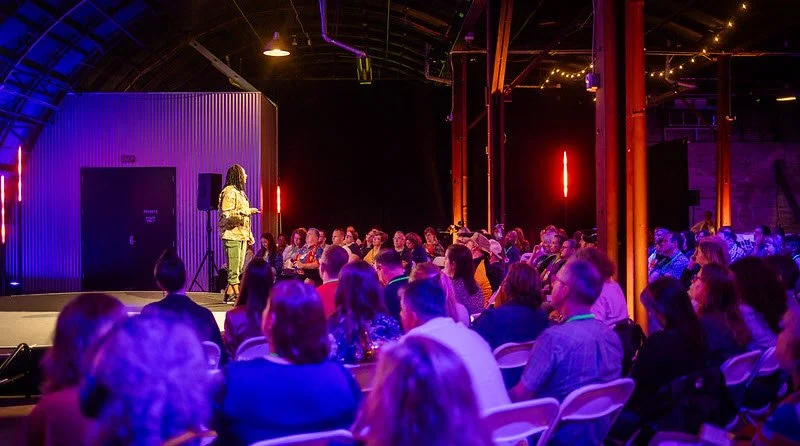
The conference took over the Fair Market and Assembly Hall locations in the East Austin neighborhood of Austin, TX, and the setting alone was worth the trip. Restaurants and bars line the streets, beautiful murals and street art pop up around every corner, a statue of a baby elephant greets you, and brightly painted bungalows give the whole neighborhood a colorful, creative energy. You can see more of the vibe in NeuroDiversion's full photo gallery.
In this post, I'll cover what neurodiversion is, what makes it different, my three biggest takeaways from the weekend, and how the whole experience connects back to executive function skills in ways you might not expect.
What is NeuroDiversion?
It’s a conference of sorts, but not the typical conference you might be imagining. I think the best way to explain it is through the organizers’ goals, which are three-fold. They designed the weekend with the hope that everyone leaves with:
Something they’ve learned
Someone they’ve met
One goal for the year ahead
Goal 1: Learning something new
The event organizers hit the ball out of the park on this one. Learning opportunities were everywhere. The keynote speakers didn’t just share about themselves and their work, they taught us tools and strategies, provided a way to reframe thinking about ourselves, or shared the latest research on a topic. The numerous breakout sessions covered everything from the neuroscience of creativity and listening skills to parenting with ADHD and how hormones impact our executive functioning and day-to-day life. Each session gave attendees something to walk away with - inspiration, a place to start, or a practical framework for approaching a new way of thinking. The organizers did a fantastic job of curating the session topics. It truly felt like there was something for everyone and in some of the time slots, I struggled to choose which breakout session to attend. There is an option to order the media package, which includes all sessions to review on your own time after the conference is over. I also found that the sessions inspired conversations outside of the conference space, threading learning throughout the entire weekend.
Goal 2: Meeting someone
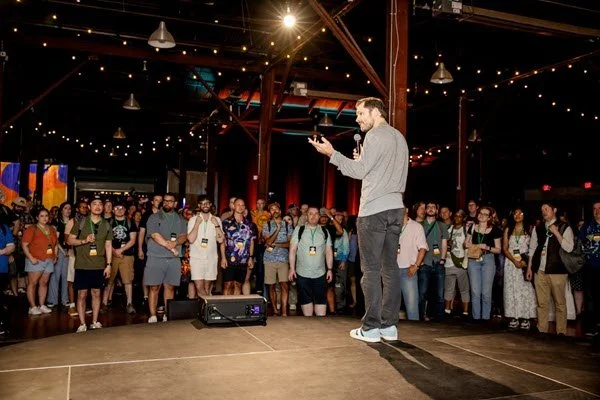
There were a number of options for meeting new friends and making connections. Instead of formal networking sessions, there were comfy spots to sit and connect with others, low-stakes activities to join in on (folding paper planes and meditation included), and an opening night party, complete with a trick roper and a harpist. The location in East Austin is excellent for spontaneous smoothie or coffee breaks at local snack shops, which line the streets adjacent to Fair Market. Interestingly, many of the people I spoke with shared that unlike other situations in their lives, they felt very comfortable starting up conversations with new people, inviting them to lunch or to have a chat, and fast friendships were formed. I think the shared experience of being neurodivergent (or supporting those who are) makes it easy to find connection. Without the pressure of “are they going to think I’m weird?”, people were able to be themselves and find others like them. I’m so happy to report that I made some new friends, we’ve all already planned to return next year together, and have stayed in touch since the conference. One improvement that will hopefully be included in the future is the ability to message people within the conference app. There were a few people I met whose contact information I didn’t grab at the moment and didn’t run into them again. An easy way to message them on the app would level up the ability to develop friendships and connections.
Goal 3: A goal for the year ahead
The structure of the conference itself nudges you toward goal-setting, which I love because it naturally incorporates many executive function skills. The fact that they’re hoping we come away with one goal shows me that they understand the challenges that neurodivergent brains face with both reaching goals and also over-committing. Having a concrete, simple framework of just one goal makes it feel manageable rather than overwhelming. I also like how they did not define the goal and left it up for interpretation. Some folks might have a goal to be more on time using Lauren Russo’s “Life Hack” tip of resisting the urge to do “just one more thing” before you leave the house. Others might have a broader goal of exploring their neurodivergent experience and learning more about it. I actually chose two goals, one practical and one growth-oriented: make business cards to bring to next year's conference, and practice being more present in conversations so I remember more of them. Whatever yours is, it’s up to you!
What If I’m Not a Conference Person?
Conferences are not exactly known for being sensory-friendly, low-pressure environments, but this one was different. There were many things in place to make the experience as easy as possible for attendees. Instead of suits, ties, and uncomfortable heels, attendees were welcome to dress in whatever helps them feel comfortable. Upon check-in, attendees were able to choose the color of their lanyard for their badge. Green meant “I’m open to talking and it’s okay to approach me.” Yellow was for people who were unsure. “Approach with caution” is how I heard someone describe it. And red was for people who were there to attend, but were not up for any unnecessary social interaction. The app, while fairly simple, had complete information about the schedule, the breakout sessions, and other events. As this event grows, I imagine the app will become more robust, but it worked well for its purpose. And, luckily, the staff and volunteers made themselves readily available, and if you ever had a question, it was very easy to get an answer. I found everyone that I interacted with was very friendly and willing to help. The overall feeling was that everyone there, from the organizers to the volunteers to the attendees, genuinely wanted you to have a good experience, and that made a real difference.
My Personal Takeaways
Everyone is going to have a different type of experience at a conference, especially one like this. I’d like to share three takeaways from my experience over the weekend. I have so many more, but these three came to mind first.
Takeaway #1: This is a place to be yourself. Or begin to find yourself.
I feel like I heard the following two phrases most often over the weekend:
I finally feel like I can fully be myself here and no one will judge me.
I feel like I’m discovering parts of myself I didn’t know existed.
For me, it was the first, for sure. But what does it actually mean to "be yourself" when you've spent years, maybe your whole life, being someone else?
If you're not familiar with the term, masking is something many neurodivergent people do, often without even realizing it. It's the act of suppressing or hiding their neurodivergent traits in order to fit in, meet neurotypical expectations, or simply get through the day. It can look like forcing eye contact, suppressing fidgeting, pretending to follow a conversation you've completely lost track of, or acting calm when your nervous system is actually freaking out. It's exhausting, and for many people, it becomes so automatic that they forget or don’t even realize they're doing it at all. In this article on masking in the workplace from Psychology Today, the author shares some of the reasons people mask, including fear of judgment or stigma and fear of bullying. The conference design, from environment to messaging, created a space where people did not experience these fears and allowed them to “unmask”.
One person I spoke with shared something that has stayed with me. Since the conference, she said, she has been able to express herself more clearly, both in her own mind and out loud. She has also been thinking about her masking experience. From the outside, people see someone who is calm, collected, and has it all together. On the inside, her experience is quite different. It's a good reminder that masking isn't usually noticeable to others, and that the gap between how we appear to others and how we actually feel inside can be significant and a heavy load to bear.
What I love most about the conference is that it seemed to create the conditions for both kinds of experiences and supported that essential executive function skill of metacognition. Whether you arrived knowing exactly who you are and just needed a place to finally show up that way, or whether you left with more questions about yourself than you came in with, both are valid, and the conference really provided space and acceptance for that. When we spend time in places that support this type of self-reflection, our metacognitive thinking skills really blossom.
Takeaway #2: It is okay to hate your brain sometimes.
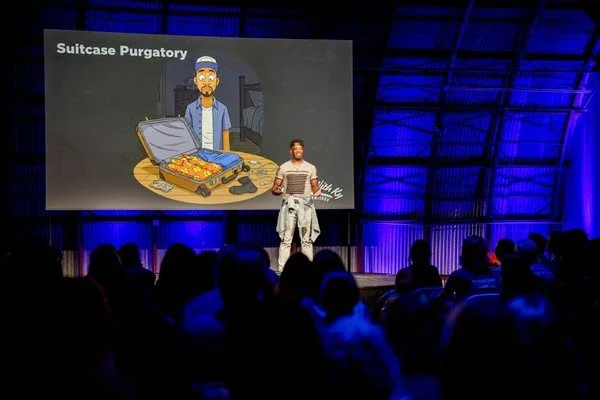
In a world that often promotes toxic positivity, even unintentionally, it was refreshing to be in a space where we heard two non-toxic messages that may seem contradictory, but are actually quite representative of the neurodivergent experience. The first was woven throughout the conference, “You're not broken. You're just right as you are.” And also, as the very funny and inspiring keynote speaker Ky Westcott, of The Vibe With Ky said, “It's okay to hate your brain sometimes.”
Neurodivergent brains are simultaneously frustrating and wonderful. In order to truly see that we're not broken, we need to learn to work with them, and sometimes that means hating them first. When we identify what’s so frustrating, we can really unearth what’s going on. The skill of cognitive flexibility truly helps here. Not only do we have to imagine that things can be different, we also have to get creative to find solutions. But, ADHD brains are inherently creative, so here’s an opportunity to use those flexible thinking skills and set ourselves up for success!
Ky shared an example of this type of thinking that resonated with me deeply. Struggles with object permanence are common with ADHD brains. “Out of sight, out of mind” is the motto for many people with ADHD, and this can even apply to friends, colleagues, and family. It may be hard to believe if this doesn't happen to you, but I discovered at the conference that I'm definitely not the only one who forgets who her friends are. Ky learned to work with his brain, use some cognitive flexibility, and came up with the solution of printing out photos of his family and friends and hanging them on his fridge. This strategy helps him remember to call his mom and ask his friends to hang out. My takeaway is that sure, we can hate our brains (they’re super frustrating sometimes!), but after we’ve done that, we need to ask ourselves, “What can I do to work with it instead?”
Takeaway #3: Executive function skills are practiced at this conference without even trying.
For many neurodivergent people, practicing executive function skills often feels hard and effortful in daily life. And often, the situations where we can practice them are boring or just not things that we truly want to do. But, at NeuroDiversion, we were there because we wanted to be and the environment was designed in a way that made it feel natural and even enjoyable to practice these crucial life skills.
Let’s take a look at a few skills that the conference naturally lent itself to practicing. The whole weekend was planning and prioritization in action! From choosing between breakout sessions, deciding how to spend free time, interacting with others, and figuring out meals, hotels, travel and other logistics, there were opportunities everywhere!
I found myself using a lot of flexible thinking and self-regulation over the weekend. One particular session I wanted to go to was standing room only when I arrived a little late, but I took a deep breath, calmed myself, and noticed an empty chair towards the front. The reason I was late was because a spontaneous conversation pulled me in an unexpected direction. But, I used those flexible thinking and self-regulation skills and went with it, trying to simultaneously stay present in the conversation and monitor the time to see if it still made sense for me to go to the session. Working memory was also challenged for me, but supported by the app which helped me remember which sessions I was signed up for. I also used my working memory to try to remember new people’s faces and names, which is a big challenge for me.
As I mentioned in my first takeaway, metacognition is woven throughout the whole weekend with unending opportunities to learn about ourselves, notice what is working, what might need to change, and how we’re benefitting from the experience. We can also reflect on our experience afterwards and see what we’d like to do differently if we attend next year.
Metacognition was also likely super helpful for people who found the idea of attending a conference daunting in the first place. Reflecting on why they want to go, thinking about what they might learn, and then figuring out what they would need to make it happen all use metacognitive thinking. In addition, their task initiation and goal-directed persistence skills were strengthened just by showing up. They learned they could do it, figured out what tools they needed to get through it, and hopefully advocated for themselves if they needed help. They now have solid evidence that they can step outside of that comfort zone, push through the fear zone, and land in the learning zone.
Let’s go to NeuroDiversion 2027 together!
If you've made it to the end of this post, I hope you're feeling even a little bit curious about NeuroDiversion, whether for yourself, your child, or someone you support. It was one of the most energizing and affirming experiences I've had in a long time, and I'd go back in a heartbeat. As I said, one of my goals for the year is to show up next time with business cards, so if you're planning to attend NeuroDiversion 2027, come find me! Registration is not open yet, but you can add your name to their mailing list on the NeuroDiversion website.
If this post got you thinking about your own executive function skills, I'd love to help you explore that further. Check out my post What Are Executive Function Skills? for a deeper dive into the 11 skills and how they might be showing up for you.
And if you want to ask me more about my experience at NeuroDiversion, shoot me an email!
Want to explore this further?
Learn more about executive function coaching
If you're curious about how strengthening executive function skills can improve your daily life, learn more about executive function coaching or book a free intro call with me. We can talk about what's going on and whether I can help.
Try the free planning tool
Not ready to talk yet? Download the free weekly planning tool and see what executive function strategies look like in practice.
Or just want more articles like this? Subscribe to the newsletter for occasional executive function tips and strategies.